Psychological Tests II What are the Tests & Why TAT is the most Feared

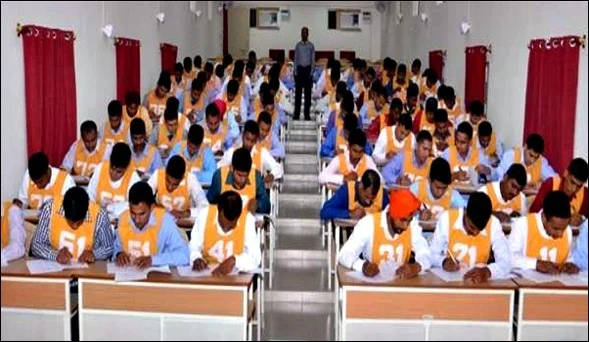
The Service Selection Board (SSB) interview is a rigorous and multi-faceted process that assesses candidates for their suitability to become officers in the Indian Armed Forces. Among the various tests conducted during the SSB interview, the psychological tests hold a significant place. These tests are designed to evaluate a candidate's mental resilience, personality traits, and overall psychological fitness.
Overview of Psychological Tests in SSB. The psychological tests in the SSB interview are typically conducted on the second day of the selection process. These tests are structured to bring out the natural and subconscious traits of the candidates. They consist of:
- Thematic Apperception Test (TAT)
- Word Association Test (WAT)
- Situation Reaction Test (SRT)
- Self-Description Test (SDT)
Let’s take a closer look at each of these tests.
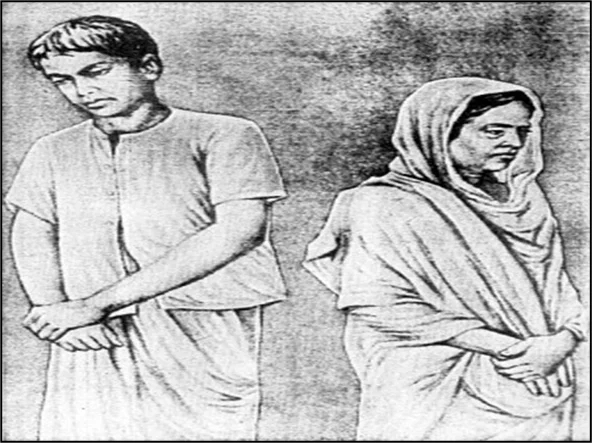
Thematic Apperception Test (TAT). The Thematic Apperception Test (TAT) is a projective test where candidates are shown a series of ambiguous pictures. You are required to write a story for each picture within a limited time frame (usually 4 minutes per picture). The goal is to assess your imaginative & cognitive processes, alongwith your problem-solving abilities.
Assessment. The stories are analysed for personality traits, problem-solving abilities, social adaptability and emotional intelligence.
Word Association Test (WAT). The Word Association Test (WAT) involves 60 words flashed on a screen one by one, and candidates are required to write the first thought or sentence that comes to their mind for each word within 15 seconds.
Assessment. This test assesses your thought process, emotions and fear associated.
Situation Reaction Test (SRT). In the Situation Reaction Test (SRT), candidates are given a booklet with 60 real-life situations, and they must respond with how they would react in each situation. The time allotted is typically 30 minutes, so speed and clarity are essential.
Assessment. This assesses their thought processes and reactions to situations as stimulus.
Self-Description Test (SDT). The Self-Description Test (SDT) requires candidates to write about themselves based on different perspectives, What their parents, friends, teachers, and they themselves think about them.
Assessment. This test helps assess your self-awareness and how well you understand your strengths and weaknesses.
Mute Question: Which is the most feared or challenging test amongst the psychological tests in a SSB Interview. The psychologist through these tests aims to assess various domains of human behaviour and mental processes. These domains can be broadly categorized into cognitive, social, and personality. Each test is designed to asses certain OLQ by means of the candidate reaction as an response to stimulus generated by the psychologist. Furthermore, each candidate has different identity reflected in term of his personality. Therefore, no two tests offers the same degree of difficulty as perceived by the candidates and degree of difficulty can be altered by selection of pictures, words and situations.
To summarise, some candidates find the Thematic Appreciation Test (TAT) the most challenging because of the imaginative process and time pressure along with its subjective nature of the test and some finds the SRT more challenging because of the reasoning along with its objective nature of test as they haven’t experienced the situations in real life against the time pressure to pen the same. Furthermore, no response is a correct or in-correct response, it all depends upon your personality in terms of Age, Gender, Physical built, Education standards, Habitat – Rural or Urban, Your experiences in life, Your family background and Friends. So, your selection is a factor of Intelligence. Self-Awareness alongwith Social and Trainable Quotient. To conclude, it is unfair to say, which is the most difficult or the feared test, but OIR (Officer Intelligence Rating) Test is the easiest as there is only one correct answer amongst the options presented.
Conclusion. To summarize, taking a positive interpretation approach can have a huge impact on how we see and respond to many events in life. By viewing obstacles as opportunities, failures as learning experiences, and differences as potential for progress, we can establish a mindset that promotes resilience, optimism, and personal development. Embracing positivity in our interpretations not only improves our mental health, but it also enables us to negotiate life’s ups and downs with poise and optimism.