Psychological Tests II TAT : What is TAT & Learning the Basics

TAT is a projective psychological assessment tool, and the second test in the psychological battery of tests conducted by the Psychologist. It is meticulously designed to dwell into candidate's unconscious mind, unveiling their personality traits leading to assess a person’s thought process, observation skills, attitude, and emotional responses and motivational patterns through the medium of storytelling.
Psychological Tests
What is Thematic Appreciation Test – TAT
In SSB (Services Selection Board) interviews, TAT stands for Thematic Apperception Test. The test involves showing candidates a series of pictures, and they are required to write stories based on their interpretation of the images. It's a psychological test, that assesses a candidate's personality, emotional stability, and their suitability for selection as an officer after undergoing training in the armed forces.
In this article, we delve into the intricacies of the TAT, Historical Perspective, Methodology for Conduct of Test, Psychologist Interpretation of Stories and Instructions to remember. The Thematic Apperception Test (TAT) holds significant importance in psychological evaluations during the SSB (Services Selection Board) Interviews.
What is Thematic Apperception Test (TAT) in SSB?
TAT is a projective psychological assessment tool, and the second test in the psychological battery of tests conducted by the Psychologist. It is meticulously designed to dwell into candidate's unconscious mind, unveiling their personality traits leading to assess a person’s thought process, observation skills, attitude, and emotional responses and motivational patterns through the medium of storytelling.
Historical Perspective - Thematic Apperception Test
Tests were conceived in the 1930s by renowned psychologists Henry A. Murray and Christina D. Morgan at Harvard University.Tests were developed to establish a method for evaluating human personality through indirect means. Unlike traditional testing that focuses on direct questioning, the TAT uses images to arouse stories that reflect the individual's inner thoughts and feelings.
Why in SSB Interview?
It’s designed by the Psychologist with objective to arrive at Candidate’s true personality traits, by uncovering candidate’s unconscious motives, social drives or needs thought patterns, and how they perceive and react to different situations.
Test Procedure or Methodology of Conduct
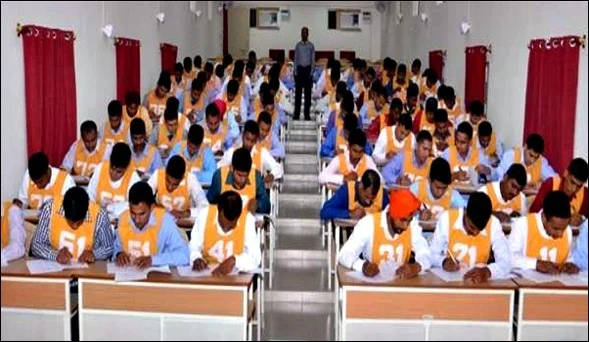
In this test the candidates will be presented with a series of 12 picture on the screen through projection, generally 11 pictures with some content and 01 blank or clear slide for 30 seconds each in sequence. After each picture is projected, candidates are required to write a story based on their perception of the picture shown in next 4 minutes.
Contents of Story. The content of the story should be based on a main character and how he/she resolves the problems perceived. The candidates are asked to create a story for each picture, detailing:
- What is happening in the scene
- The thoughts and feelings of the characters
- The potential outcomes of the perceived problem in situation
Through this storytelling process, candidates reveal not just their imaginative capacities but also their values, beliefs, and interpersonal relationships.
How TAT differs from PPDT ?
The idea of TAT is similar to that of PPDT story composing since you are relied upon to compose a story dependent on the image that appeared. Yet, the distinction lies in the design of story composing. In TAT, taking note of down the character subtleties like age, sex, mind-set and activity are not needed. Additionally, it doesn’t include presenting their perspective, no group discussion to arrive at a common story.
How to Approach the SSB Thematic Apperception Test?
When the picture is shown to you, observe it carefully and perceive the problem properly and see it from a point that is what the examiner is trying to ask you or what OLQ’s should be reflected in your story
· Avoid writing a very long and complicated story. Do not waste your time in describing the characters. Rather, focus on identifying the main character, the situation or the problem he is facing with and how he is going to overcome it with the most practical solution.
· Write the story in past tense and it will be great if you relate the outcome to your own personality.
· Keep the stories realistic and give a good ending with a proper conclusive ending.
What if you can’t finish the story in the allotted time?
If you are unable to finish the story in time, do not panic. This can affect your rest of the performance. So, if you can’t finish a story, focus on the picture that is currently shown on the screen. Keep the ending of the previous story in mind. Finish the blank page story beforehand so that you can give that time to complete the unfinished story.
TIP. Prepare yourself well by writing such stories at home. Keep a blank story ready before the exam.
Officer like Qualities - SSB Thematic Apperception Test. The candidates should demonstrate the OLQ’s based on the type of picture presented. Speed of choice (in tough spots)
TAT – Key Points to Remember.
· Main Character or Hero. No exaggeration and supernatural powers to the hero or the main character. Hero should devise practical solutions to the problem perceived.
· Negative Story. Negative stories unless clearly shown (like murder, theft, war, etc.) should be avoided.
· Military Hero. Some chivalrous activities of the hero should be apparent yet the story ought to be sensible and the attention ought to be on social and community issues. Try not to bias all your stories towards military hero.
· Time Management. Complete the story in 4 minutes. Try not to leave the story fragmented and attempt to construct a positive story. The story ought not be excessively short or excessively long. Do not leave the story incomplete.
· Positive Ending. Try to build a positive story. Finally finish strong with desired outcomes. Demonstrate few OLQ’s in the story based on the picture presented.
· Realistic Narrative. Some heroic actions of the main character are appreciable but the story should be realistic and the focus should be on social issues. Write down the conclusion or qualities projected from the story at the end.
Psychologist Assessment
Psychologist analyse the stories to understand the candidate's thought processes, emotional responses, and how they handle challenges and conflicts.
Unlike standardised tests with fixed scoring systems, the TAT relies upon qualitative analysis or subjectivity while assessment. The assessor examines each story based on the following aspects along with the social economic quotient of the candidate.
- Content. What themes emerge? Are they oriented toward achievement, interpersonal relationships, or conflict?
- Emotional Tone. Is the story predominantly positive, negative, or neutral? How does the candidate express feelings of stress, joy, or anger?
- Behavioural analysis. How does the candidate present themselves during the storytelling? Are they confident, hesitant, or excessively introspective?
Final Thoughts. Candidates should approach the TAT with confidence and effectively demonstrate their suitability for the SSB interview. To effectively approach the Thematic Apperception Test (TAT) in an SSB interview, focus on understanding the picture, developing a coherent story with a positive outcome, and showcasing Officer Like Qualities (OLQs). This interpretive approach allows for an in-depth understanding of the candidate's personality, offering insights into their emotional control, self-perception, and social attitudes.