Indian Navy II Operation Trident 1971
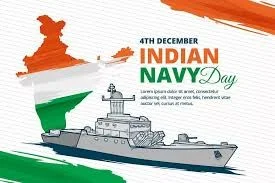
Operation Trident was an offensive operation launched by the Indian Navy on Pakistan's port city of Karachi during the Indo-Pakistani War of 1971. Four Pakistani Naval Ships was destroyed during the operation along with the blockade of Port Karachi of Pakistan. India celebrates its Navy Day annually on 4 December to mark this operation.
Indian Navy:
Operation Trident was an offensive operation launched by the Indian Navy on Pakistan's port city of Karachi during the Indo-Pakistani War of 1971. Four Pakistani Naval Ships was destroyed during the operation along with the blockade of Port Karachi of Pakistan. India celebrates its Navy Day annually on 4 December to mark this operation.

Home / News & Blogs / Indian Navy
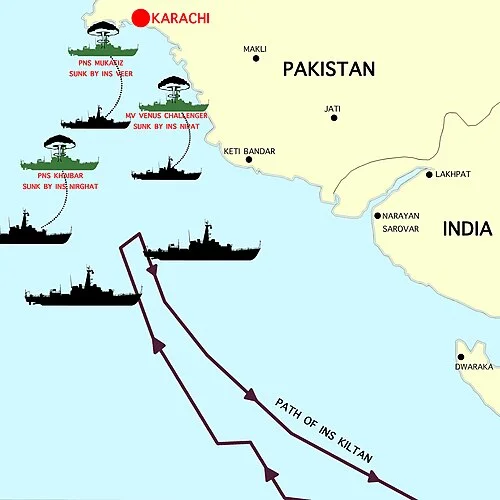
peration Trident was an offensive operation launched by the Indian Navy on Pakistan's port city of Karachi during the Indo-Pakistani War of 1971. Operation Trident saw the first use of anti-ship missiles in combat in the region. The operation was conducted on the intermittent night of 4 and 5 December and resulted in heavy damage on Pakistani vessels and facilities along with the seize of Karachi Port of Pakistan.
While India suffered no losses, Pakistan lost a minesweeper, a destroyer, a cargo vessel carrying ammunition, and fuel storage tanks in Karachi. Another destroyer was also badly damaged and eventually scrapped.
Why Karachi Port – Background ?
In 1971, the Port of Karachi housed the headquarters of the Pakistan Navy, and almost its entire fleet was based in Karachi Harbour. Since Karachi was also the hub of Pakistan's maritime trade, a blockade would be disastrous for Pakistan's economy. The security of Karachi Harbour was predominant to the Pakistani High Command, and it was heavily defended against any air or naval strikes. The strike aircraft based at airfields in the area secured the port's airspace.
Indo Pak War – 1971. Towards the end of 1971, there were rising tensions between India and Pakistan, and after Pakistan declared a national emergency on 23 November, the Indian Navy deployed three Vidyut-class missile boats in the vicinity of Okha, near Karachi, to carry out patrols. As the Pakistani fleet would also operate in the same waters, the Indian Navy set a demarcation line that ships in their fleet would not cross. Later, this deployment proved useful for gaining experience in the region's waters. On 3 December, after Pakistan attacked Indian airfields along the border, the Indo-Pakistani War of 1971 officially began.
Operation Trident – Prelude. The Indian Naval Headquarters (NHQ) in Delhi, along with the Western Naval Command, planned to attack the Port of Karachi. A strike group under Western Naval Command was formed for this mission.
Karachi Strike Group. Karachi Strike Group was formed and consisted of the three Vidyut-class missile boats: INS Nipat, INS Nirghat and INS Veer, each armed with four Soviet-made SS-N-2B Styx surface-to-surface missiles with a range of 40 nautical miles, two Arnala-class anti-submarine corvettes: INS Kiltan and INS Katchall, and a fleet tanker, INS Poshak.
Attack on Karachi Port. On 4 December, the strike group reached 250 nautical miles south off the coast of Karachi and maintained its position during the day, outside the surveillance range of the Pakistan Air Force. As Pakistani aircraft did not possess night-bombing capabilities, it was planned that the attack would take place between dusk and dawn. At 10.30 pm Pakistan Standard Time (PKT), the Indian task group moved 180 nmi from its position towards the south of Karachi. Soon, Pakistani targets, identified as warships, were detected 70 nmi to the northwest and northeast of the Indian warships.
PNS Muhafiz - Minesweeper. At 11.20 pm (PKT), PNS Muhafiz, an Adjutant-class minesweeper, was targeted by INS Veer. A missile was fired, and Muhafiz was struck on the left side, behind the bridge. It sank immediately before it could send a signal to the PNHQ, killing 33 sailors onboard.
Meanwhile, INS Nipat continued towards Karachi and targeted the Kemari oil storage tanks, placing itself 14 nmi (26 km; 16 mi) south of the Karachi Harbour. Two missiles were launched; one misfired, but the other hit the oil tanks, which burned and were destroyed completely, causing a Pakistani fuel shortage. The task force returned to the nearest Indian ports.
Soon, the PNHQ deployed rescue teams on patrol vessels to recover the survivors of Khaibar. As Muhafiz sank before it could transmit a distress call, the Pakistanis only learned of its fate from its few survivors who were recovered when a patrol vessel steered towards the ship's burning flotsam.
Aftermath Operation Trident : Pak Air Force Retailition
The Pakistan Air Force retaliated for these attacks by bombing Okha Port, scoring direct hits on fuelling facilities for missile boats, an ammunition dump, and the missile boats' jetty. The Indian Navy anticipated this attack and had already moved the missile boats to other locations to prevent any losses.
As a result of the operation, the Pakistan Armed Forces were put on high alert. The deployments raised several false alarms in the ensuing days about the presence of Indian Navy vessels off Karachi. One such false alarm was raised by a Pakistan Navy Fokker Friendship reconnaissance aircraft on 6 December 1971, which incorrectly reported a frigate of the Pakistan Navy as an Indian Navy missile boat. The PNHQ requested a Pakistan Air Force air strike on the supposed Indian ship. At 06.45 am (PKT), fighter jets were scrambled and strafed the vessel before it was identified as the frigate PNS Zulfiqar. This friendly fire incident resulted in casualties and damage to the vessel.
Awards. With no casualties on the Indian side, this operation was a great success. To mark its victory, the Indian Navy annually celebrates Navy Day on 4 December.
Several Indian Navy personnel were honoured with gallantry awards.
- Captain (later Vice Admiral) Gulab Mohanlal Hiranandani, Fleet Operations Officer, , was awarded the Nau Sena Medal for the detailed operational planning.
- Cdr Babru Bhan Yadav, Strike group Commander was awarded Mahavir Chakra for planning and leading the task force.
- Lieutenant Commanders Bahadur Nariman Kavina, Inderjit Sharma, M O Thomachan and Om Prakash Mehta, the commanding officers of INS Nipat, INS Nirghat, and INS Veer respectively were awarded Vir Chakra.
- Master Chief M. N. Sangal of INS Nirghat was also awarded the Vir Chakra.
- Lieutenant Phool Kumar Puri, Engineering Officer INS Veer, was awarded the Nau Sena Medal for his efforts in the 1971 war.
Jai Hind