
Foreign Relations II Indo-Bangladesh Relations, Bangladesh Crisis and Its Implications for India
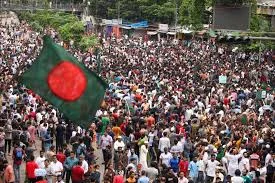
On 05 August 2024, the former Prime Minister of Bangladesh, Sheikh Hasina, was ousted from her country and power, ending her rule since January 2009. This event was seen as a massive escalation, with what initially started as student’s protests and resulted in a major crisis in Bangladesh.
Bangladesh: Historical Context
Partition of India 1947. Bangladesh was earlier known as East Pakistan from 1947-1971. After a long struggle it, gained its independence as a sovereign independent country in 1971. Although East Pakistan and West Pakistan were a part of the same country, they were located miles away from each other. Despite East Pakistan's greater population, most political authority was controlled by West Pakistan.
Cultural & Political Alienation of East Pakistan. Bengalis in East Pakistan felt alienated from their home because of the central government in Islamabad's political, economic, and cultural marginalization of their region. Over the years, the unrest in East Pakistan grew more intense. As the Islamabad central government persisted in prioritizing the growth of West Pakistan, East Pakistan persisted in its poverty and political marginalization.
In the elections of 1970, Sheikh Mujibur Rahman, leading the Awami League, emerged victorious, and this meant that they would form the government in Pakistan. The leadership of West Pakistan was not ready to give power to leadership from East Pakistan.
Operation Searchlight. Demonstrations in Dhaka, which were met with a brutal crackdown and mass killings by the Pakistani military. This in turn sparked the Bangladesh Liberation War. Millions fled their homes, creating a huge refugee crisis in India.
Indo-Pak War 1971. Under Prime Minister Indira Gandhi, India took swift action and intervened to resolve the crisis. On December 16, 1971, Bangladesh proclaimed its independence, becoming a sovereign country, which was largely due to the help provided by India to Bangladesh Liberation Forces.
Sheikh Mujibur Rahman, who fought against the discrimination by West Pakistan and gained massive support in the 1970 elections, then became the first Prime Minister of the country and was assassinated in 1975.
Sheikh Hasina – Political Career. Sheikh Hasina started her political life following the assassination of her father and the majority of her family in a military coup in 1975. During the coup, she was not present in Bangladesh and spent several years living in exile afterward. It was only in 1981 that she went to her country and began to take the lead of her father's political party, the Awami League. She led opposition activities against the military and authoritarian authority of President Ziaur Rahman, which helped the party regain prominence.
She led her first term in 1996 till 2001, becoming the first female Prime Minister of Bangladesh. However, she lost the next elections to a four-party alliance led by the BNP, Jamaat-e-Islami, Jatiya Party (Manju), and Islamic Oikyo Jote.
In January 2007, Sheikh Hasina was arrested on account of corruption and extortion and Awami League supporters saw this as a politically motivated act. In December 2008, she won elections and was sworn in once again as the PM of Bangladesh in January 2009, followed by another consecutive term in 2014 and 2018.
What Led to the Bangladesh Crisis?
Student Movement. More than 130 people died in what was a student protest against the quotas in government jobs, which quickly escalated to become a major crisis for Bangladesh, ultimately leading to the resignation of Sheikh Hasina. The student protesters demanded jobs based on merit and not on quotas. These government job quotas were facing severe criticism for being archaic and prone to abuse, since the major beneficiaries were mainly the descendants of freedom fighters in Bangladesh.
Elections 2024. But that's not it; these protests emerged at a critical juncture. Sheikh Hasina's government won a fourth consecutive term in January 2024 and these elections were controversial since the opposition parties boycotted this election.
Massive Unemployment. Bangladesh was already facing massive unemployment, and the inflation knew no bounds. The protests escalated even more with her remarks that labelled the protesters as Razakars and the crackdown by the police on these protests.
Socio Economic Issues. Combination of various socioeconomic issues, broader pressures made worse by COVID-19, persistent corruption, a lack of jobs and employment, inflation, and other causes were enough to add fuel to unrest in Bangladesh
These events led to Sheikh Hasina flee from Dhaka, Bangladesh and landed in India as a temporary refuge.
Rise of Mohammad Yonus.
The Bangladeshi economist, entrepreneur, and civil society leader who has been serving as the Chief Adviser of the interim government of Bangladesh since 8 August 2024. Yunus pioneered the modern concept of microcredit & microfinance, for which he was awarded the Nobel Peace Prize in 2006 as the first Bangladeshi. He is the founder of Grameen Bank.
Following the overthrow of Sheikh Hasina, President Mohammed Shahabuddin gave Yunus a mandate to form an interim government, acceding to calls from student leaders for his appointment. His government has appointed a Constitutional Reform Commission to draft revisions to the Constitution of Bangladesh and has pledged to hold the next general election by June 2026.
How does the Bangladesh Crisis Affect India?
India might have Lost a Trusted Ally. Sheikh Hasina at the helm of leadership, India-Bangladesh relations had only improved. In her absence alongwith poltical uncertainty in our neighbourhood, India might have lost a trusted ally.
Economic Uncertainties. Bangladesh became India's leading trading partner with USD 13 billion in commerce. The SAFTA agreement provided duty-free access on the majority of tariff lines.
Risk of Anti-Indian Sentiment amongst Bangladeshi Public. Under Sheikh Hasina’s rule, India and Bangladesh have worked with each other closely and with her seeking refuge in India, her unpopularity within Bangladesh runs the risk of an anti-Indian sentiment. Often the general public is unaware of the complexity of bilateral relationships and may be quick to equate one particular leader with the whole nation.
Challenges Ahead - India
Challenges to Border Security. India shares the longest border with Bangladesh approx. 4000 kms. It is guarded by the Border Security Force (BSF) on the Indian side of this border. However, one must not forget that it is a porous border. Which means that it is easier for people to infiltrate our territory.
Challenges to Internal Security. The biggest concern for India in relation to the present crisis is the possibility of tensions in the north-eastern states of India in case of infiltration by the Bangladeshis besides smuggling, entry of illegal migrants (including the issue of Rohingyas), militancy, and radicalism, which are internal security challenges for us. A less pro-Indian government may give extremist groups opposed to the country more clout, further taxing border security.
Threat of China and Regional Geopolitics. Under Sheikh Hasina, Bangladesh was able to manage both India and China. It would be difficult to predict whether the opposition parties and the present interim government would toe the same policy now. China has always used the moment of weakness of each country in the neighbourhood and has used the situation to its advantage. Bangladesh's political unrest may provide China another opportunity to expand its sphere of influence in South Asia.
The similar story has unfolded in Maldives and Sri Lanka. India undoubtedly needs to be on guard. In order to combat this, India will need to establish strategic positioning that will have twin objectives: first, to stop extremist forces from expanding and guarantee Bangladesh's economic stability, and second, to keep a check on any opportunity that can be used by China to its advantage.
Minority Question. There are humanitarian concerns over the Hindus as the minority community in Bangladesh who are allegedly facing violence in the state. According to the Bangladesh National Hindu Grand Alliance, after the administration led by Sheikh Hasina fell on August 5, there have been threats and violence against the minority community in 278 locations throughout 48 districts.
Challenge of Transboundary River Water Management. India and Bangladesh have long been at odds over how to manage their shared river flows. There are 54 rivers between the two nations that are vital to millions of people's lives in each country. Despite the signing of important treaties to govern water-sharing arrangements, like the Kushiyara River Treaty (2022) and the Ganga Waters Treaty (1996), many important rivers—most notably the Teesta River remain contentious. The Teesta River is crucial for irrigation and water supply in West Bengal, as well as for agriculture in the northern part of Bangladesh.
Uncertainties for Indian Investments in Bangladesh. Bangladesh's political unrest may pose serious risks to Indian companies and investors. The profitability and stability of Indian businesses operating in Bangladesh may be harmed by trade disruptions or delays in payments, especially in the textile industry, where Indian companies own about 25% of the units. Some of these manufacturers may decide to return to India as a result of the present instability. Initiated in October 2023, talks over a possible free trade agreement (FTA) had the potential to greatly increase bilateral trade.
Concerns over Infrastructure and Connectivity. Improved connections and infrastructure have been essential to improving ties between Bangladesh and India. India has provided USD 8 billion in loans since 2016 for a number of road, rail, and port projects, such as the Khulna-Mongla Port rail line and the Akhaura-Agartala rail link. These initiatives are essential for boosting access to India's Northeast area and promoting trade. But these crucial links could be disrupted by the present political upheaval in Bangladesh, which could impede development and put agreements in jeopardy. India's strategic interests in the region as well as regional trade and economic cooperation may be seriously impacted by such disruptions.
Way Forward.