Indian Airforce II MIG 21 to Retire in September 2025
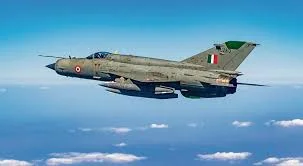
The Indian Air Force is set to phase out the last of its iconic Mikoyan-Gurevich MiG-21 fighter jets in September 2025 after six decades of service in IAF. The MiG-21 - that redoubtable warhorse of the Indian Air Force - will be phased out of active service by September, to be replaced by the newer and nimbler Tejas Mk1A fighter jets.
Protector of the Indian Skies
The IAF has 36 MiG-21 planes left in its arsenal, a far cry from the nearly 900 - of which around 660 were built in India - that protected the nation's skies and territories.
The MiG-21 first entered service in 1963, on a trial basis. The Russian-made jet went on to form the backbone of the Air Force till the mid-2000s, when the Sukhoi Su-30MKIs were brought in. After protecting the Indian skies through all major conflicts over more than six decades, the legendary MiG-21 fighter jets are set to retire in September.
Phasing out of The MIG 21.
The Indian Air Force (IAF) is set to retire the remaining Russian-origin MiG-21 fleet in a ceremonial decommissioning on September 19, 2025 at the Chandigarh airbase. Two squadrons of the MiG-21 Bisons are currently active. India procured more than 700 MiG-21 aircraft of different variants, since the aircraft’s induction in the IAF in 1963.
The phasing out of the aging MiG-21 fleet was originally scheduled to be concluded by 2022, but was held up due to the delay in the planned induction of other fighter jets, including the indigenous Light Combat Aircraft Tejas, which are set to replace the MiG-21 squadrons. Between 2017 and 2024, at least four MiG-21 squadrons were phased out.
Mig 21 Bison Capabilities. The single engine, single-seater multi-role fighter/ground attack aircraft has been a key fighter jet with the IAF. The Bison is the latest upgrade of the MiG-21 jets. Over 100 MiG-21s of the IAF have been upgraded to Bison in the last nearly three decades.
The MiG-21 Bison upgrades included avionics and communication systems, electronics, multi-function display cockpits, the Kopyo light-weight multi-mode radar, radio sets, electronic warfare suite, inertial navigation system/GPS, a helmet-mounted display and a better windshield, among others. With a maximum speed of 2230 km/hr, the jet carries one 23mm twin-barrel cannon with four R-60 close combat missiles.
The Flying Coffins. Despite its stellar performance in all wars and conflicts fought by India, the MiG-21 jets had earned a mixed reputation due to several crashes, although it can happen due to a multitude of reasons. Some estimates say that India lost over 400 MiG-21 jets, including its variants and trainer versions, since its induction, and the crashes killed over 100 pilots and some civilians.
LCA Tejas replaces Bison MIG 21
LCA Tejas programme was started to replace ageing Mig 21 fighter planes. Developed by the Aeronautical Development Agency (ADA) under the Department of Defence Research and Development and Manufactured by Hindustan Aeronautics Limited (HAL).
LCA Tejas is the lightest, smallest and tailless multi-role supersonic fighter aircraft in its class. It can carry a range of air-to-air, air-to-surface, precision-guided weapons. It has Air-to-air refuelling capability with a maximum payload capacity of 4000 kgs. LCA Tejas has maximum speed of Mach 1.8 with a range of 3000 km.
Concerns – US made GE F404 Engine.
The LCA Tejas Mk-1A is powered by the GE F404-IN20 engine, a variant of the General Electric F404 turbofan engine. To begin with, HAL has placed an order for 99 F404 engines in 2021 for the Tejas Mk-1A. However, there are inordinate delays in production of these engines with only two engines delivered as of now. The delay in engine deliveries was attributed to the need to restart the production line after it was dormant for five years.
Final Thoughts. India has a sanctioned fighter squadron strength of 42, but has 31 active squadrons. With the phasing out of the MiG-21 fleet will further bring down IAF’s active fighter squadrons. As the world accelerates into an era defined by stealth, sensor fusion, and artificial intelligence, India must make a decisive leap.
The acquisition and development of fifth-generation fighter aircraft is no longer aspirational, they are imperative. To conclude, LCA Tejas a just stop gap arrangement owning to its production economics and more important for developing a manufacturing ecosystem of fighter jets in India.